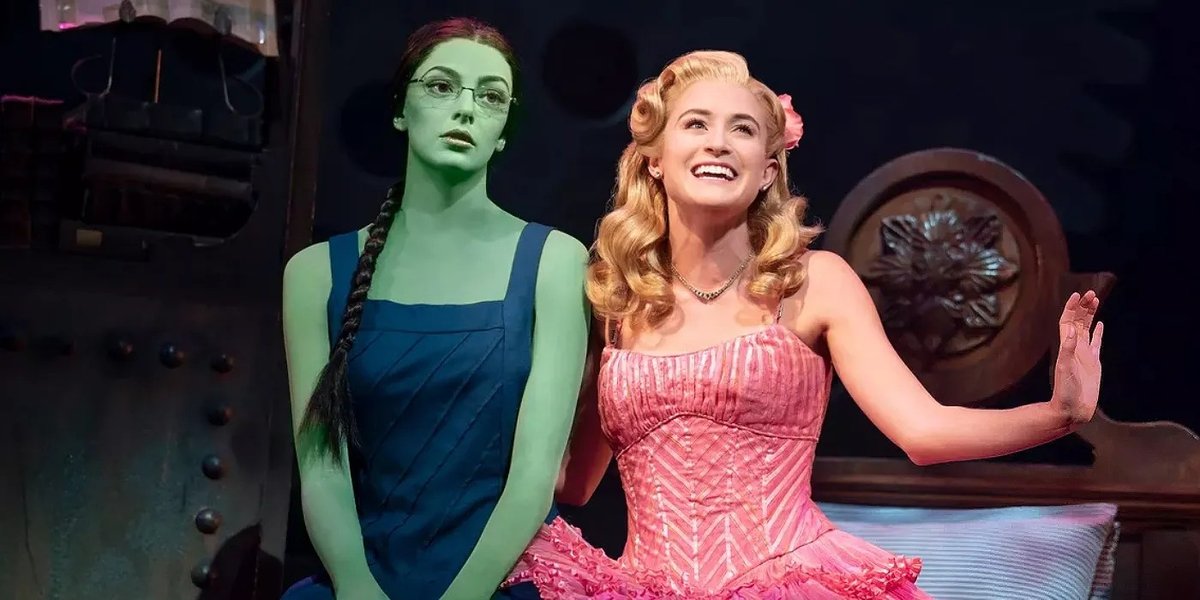
For years, the musical Wicked has been a global phenomenon, weaving a vibrant, re-imagined tapestry of Oz that audiences adore. Now, as Universal's highly anticipated Wicked: Part 1 prepares to whisk us away, fans and newcomers alike are buzzing with curiosity: how will the cinematic spectacle measure up to the beloved stage production? This Wicked Musical vs. Movie Adaptation Comparison delves into the significant creative choices made for the big screen, revealing how director Jon M. Chu and writers Stephen Schwartz and Winnie Holzman have expanded and recontextualized this extraordinary story.
From subtle character nuances to breathtaking new sequences, the movie isn't just a filmed version of the stage show; it's a meticulously crafted adaptation designed to give the land of Oz — and its most misunderstood resident, Elphaba — "room to breathe."
At a Glance: Key Differences Between the Wicked Movie and Musical
- The film adaptation of Wicked is split into two parts, allowing for deeper character development and world-building.
- New scenes offer a poignant childhood flashback for Elphaba, exploring the origins of her green skin and reactive magic.
- Dorothy Gale and elements from The Wizard of Oz are explicitly woven into Part 1 much earlier and more directly.
- Elphaba's enrollment at Shiz University unfolds differently, highlighting Madame Morrible's manipulative influence from the start.
- Characters like Dr. Dillamond and Nessarose gain expanded roles, revealing more complex motivations and backstories.
- Iconic moments, including the lead-up to "Defying Gravity," are dramatically amplified for cinematic impact.
- The movie features an expanded "One Short Day" sequence with special cameos and a clearer explanation of The Wizard's rise.
- No songs from Act 1 of the musical have been cut, though one receives an "expansion," promising a familiar yet fresh auditory experience.
A New Chapter in Oz: Why the Two-Part Approach?
The decision to split Wicked into two cinematic parts, with Part 1 arriving in November 2024 and Part 2 a year later, was a bold move by director Jon M. Chu and the original musical's creative team, Stephen Schwartz (composer/lyricist) and Winnie Holzman (book writer). Their goal wasn't merely to stretch out the runtime; it was to deepen the narrative, giving the characters and their intricate journeys the space they deserved.
This isn't a simple case of making more money from two tickets. As Chu explained, attempting to cram the entire musical into a single film would have meant significant cuts to songs and story beats that fans cherish. Instead, Part 1 meticulously covers the entirety of Act 1 from the stage musical, clocking in at over 2.5 hours. This generous runtime allows for moments that were only hinted at on stage to be fully realized, offering new perspectives and emotional weight to a story we thought we knew inside and out. It’s an approach that aims to enhance, not diminish, the magic.
Elphaba's Journey: Deeper Roots and Motivations
One of the most profound shifts in the movie adaptation revolves around Elphaba, bringing a new layer of understanding to her often misunderstood nature.
Before Shiz: A Glimpse into Elphaba's Past
The musical alludes to Elphaba's unique birth and challenging childhood through dialogue, leaving much to the audience's imagination. The movie, however, offers a powerful, never-before-seen flashback. We're transported to Elphaba's younger years, around age 10, witnessing firsthand the pain of being bullied for her green skin.
This scene isn't just about showing her struggle; it showcases a pivotal moment where a magical outburst, fueled by her distress, reveals the raw, untamed power within her. Her father's subsequent berating for this uncontrolled display offers vital context for her later reactive nature and her constant battle to harness her extraordinary abilities. It helps us understand Elphaba (Cynthia Erivo) not just as the future Wicked Witch, but as a child grappling with a unique identity in a world that fears difference.
A Fateful Enrollment: Shiz University's Unforeseen Path
In the musical, Elphaba arrives at Shiz University specifically enrolled to care for her wheelchair-bound sister, Nessarose. Her presence is a duty, a predetermined path. The movie subtly but significantly alters this.
Here, Elphaba is initially only accompanying Nessarose (Marissa Bode) to drop her off. It’s a moment of intended departure, not enrollment for herself. But it's during this drop-off that another magical outburst catches Madame Morrible's (Michelle Yeoh) keen eye. Rather than a pre-arranged placement, Morrible actively manipulates Elphaba into staying, placing her in a position of perceived debt and making her presence at Shiz less about family obligation and more about Morrible's calculated design. This change immediately casts a shadow over Elphaba's academic journey, hinting at darker forces at play from the very beginning.
Oz Unveiled: Connecting the Dots to Dorothy's Arrival
The stage musical, by its nature, keeps The Wizard of Oz connections largely offstage or symbolic. The film adaptation, however, isn't afraid to pull back the curtain and make those ties much more explicit, right from the opening credits.
Dorothy's Shadow: Early Hints of the Yellow Brick Road
The movie’s introduction to Oz is strikingly different. Instead of diving straight into the "No One Mourns the Wicked" number, we're greeted with a haunting image: a black witch's hat floating in a puddle. As the iconic song begins, the camera sweeps across the familiar Yellow Brick Road, revealing not just Glinda (Ariana Grande) descending, but also Dorothy Gale and her companions – the Tin Man, the Scarecrow, and the Cowardly Lion – already on their journey.
This isn't a subtle nod; it's a direct integration of the original story's characters into Wicked's narrative foundation. Later, a scene with Elphaba accidentally using poppy flowers to put a classroom to sleep (everyone but Fiyero, notably) to rescue a lion cub serves as a direct, powerful foreshadowing of the events to come, making the world of Oz feel more interconnected and predestined.
The Yellow Brick Road's Design: A Touch of Shared History
Another charming and telling addition is a new scene where Elphaba and Glinda, in an unexpected moment of camaraderie, are shown choosing the iconic yellow color for The Wizard's model of the brick road. This small but impactful detail injects them directly into the very fabric of Oz's most famous landmark, creating a shared history with something that will later become synonymous with Dorothy's arrival and Elphaba's downfall. It’s a moment that adds a layer of bittersweet irony to their evolving friendship.
Political Undercurrents and Unsung Heroes
The political landscape of Oz, always present in the musical, receives greater emphasis and expansion in the film, particularly through supporting characters.
Dr. Dillamond's Secret Mission: A Wider Animal Resistance
In the musical, Dr. Dillamond (Peter Dinklage), the talking goat professor, feels largely isolated in his struggle against the suppression of Animal rights. His poignant rendition of "Something Bad" highlights his personal fear and the encroaching danger.
The movie, however, elevates his role. Dr. Dillamond is portrayed as part of a secret animal resistance group, actively tracking animal crimes and disappearances. We see him meeting with this clandestine group, making his concerns not just personal laments but part of a larger, organized effort to fight for justice. When he sings "Something Bad," it carries the weight of a collective plea, making the stakes feel much higher and the political intrigue more palpable.
Madame Morrible's Machinations: An Early Alliance
The shrewdness of Madame Morrible, the headmistress of Shiz and later The Wizard's press secretary, is undeniable in both versions. However, the musical leaves her early involvement with The Wizard somewhat ambiguous, letting her ascent appear more opportunistic.
The movie removes this ambiguity entirely. Through Michelle Yeoh's nuanced performance—her tone, her expressions, her body language—and specific dialogue, it becomes clear that Madame Morrible was working with The Wizard "from the start." This clarification paints her as a far more calculated and sinister figure, pulling strings in the shadows long before Elphaba ever truly crossed her path, solidifying her role as a primary antagonist and architect of Elphaba's fate.
Character Development & Expanding Relationships
The film takes particular care to flesh out character dynamics, especially for those who might have felt less central in the stage version.
Nessarose's Growing Independence: A Daughter's Bold Move
Nessarose, Elphaba's sister, is a figure often defined by her limitations and her father's overprotective care in the musical. The movie gives her a moment of burgeoning independence and emotional assertion.
When her father, Frexpar Thropp, appears at Shiz for Elphaba's departure, Nessarose (portrayed by Marissa Bode, who uses a wheelchair, bringing authenticity to the role) takes the bold step of introducing Boq to him. This scene highlights her developing emotional attachment to Boq and her growing desire for independence, showing that she came to Shiz not just to be cared for, but to prove herself and carve out her own identity, separate from her sister's shadow. It’s a small but powerful moment that foreshadows her future assertiveness.
Fiyero's Entrance: A More Personal Introduction
The initial meeting between Elphaba and Fiyero (Jonathan Bailey), the charming Winkie prince, is different in the film, aiming for a more intimate and natural chemistry right from the start.
In the musical, their introduction is a public affair, happening in a bustling classroom alongside Glinda. It's a comedic and slightly awkward first encounter. The movie, however, orchestrates a more private and accidental meeting. Elphaba and Fiyero encounter each other one-on-one in a lush forest when his horse runs into her. This isolated, almost serendipitous meeting allows for an immediate, more personal connection to blossom, fostering a deeper, more organic chemistry between the two from their very first interaction.
The Wizard's Influence: A Propaganda Machine at Work
The enigmatic figure of The Wizard (Jeff Goldblum) and his rise to power are given greater emphasis and a clearer explanation in the movie.
The Rise of The Wizard: Expanding "One Short Day"
The song "One Short Day," a joyous explosion of discovery for Elphaba and Glinda in the Emerald City, receives an expanded section in the film. This segment features cameo appearances by original Broadway Elphaba (Idina Menzel) and Glinda (Kristin Chenoweth), who sing as "The Wise Ones."
In this expanded sequence, Menzel and Chenoweth's characters explain a prophecy foretelling that a figure capable of reading the ancient book, the Grimmerie, would lead Oz in its darkest hour. The Wizard, conveniently arriving via hot air balloon at just the right time, appeared to fulfill this prophecy, cementing his image as Oz's savior and leader. While the musical offers a vaguer explanation for his popularity, the movie clearly establishes the narrative he used to ascend to power, positioning him as a master of propaganda from the outset. This expansion not only delights fans with iconic cameos but also deepens our understanding of Oz's political landscape. If you're wondering about the future of Oz on streaming, questions like Wickeds Disney Plus status are often on fans' minds, highlighting the ongoing conversation around how this beloved story will be consumed.
The Climax Reimagined: "Defying Gravity" Takes Flight
The iconic Act 1 finale, "Defying Gravity," is perhaps the most anticipated moment for many fans, and the movie adaptation significantly amplifies its lead-up, turning it into a truly cinematic spectacle.
Escalating Stakes: A More Perilous Escape
In the musical, the confrontation leading to Elphaba's defiant flight is tense, but relatively contained. Elphaba and Glinda barricade themselves in a room, holding off a few guards before Elphaba truly embraces her power and takes to the air.
The movie, however, dramatically intensifies this sequence. Instead of a handful of guards, a whole slew of them chases Elphaba, making her escape far more desperate. Madame Morrible unleashes her terrifying flying monkeys, who smash through windows in a furious attempt to capture Elphaba. In a last-ditch effort, Elphaba and Glinda attempt to escape in The Wizard's very own hot air balloon, only for it to pop, forcing Elphaba to truly embrace her destiny and "defy gravity" in a moment of pure, unadulterated magical power. This heightened sense of peril and the epic scale of the chase make Elphaba's ultimate triumph all the more breathtaking and earned.
What These Changes Mean for the Future of Oz (and Part 2)
These early shifts in Wicked: Part 1 are not arbitrary. They are strategic choices designed to lay a richer foundation for the entirety of the story, particularly as we head into Part 2. By deepening Elphaba's backstory, explicitly linking Oz to Dorothy's narrative, and fleshing out the political intrigues and supporting characters, the film promises a more textured and emotionally resonant experience.
The two-part structure isn't just about fitting in more songs; it's about giving every character, every motivation, and every turn of the plot the breathing room to resonate fully. These changes suggest a film that aims to honor the spirit of the musical while using the unique capabilities of cinema to explore themes and relationships with unprecedented depth. It allows the story to evolve naturally, setting up conflicts and character arcs that will pay off with even greater impact in the concluding chapter.
Navigating Your Own Oz: Musical or Movie First?
With these significant changes, you might be wondering whether to experience the musical or the movie first, or if one is "better" than the other. The truth is, both offer uniquely powerful experiences.
If you cherish the intimate, immediate magic of live theater and prefer to discover the story through its original, beloved framework, seeing the stage musical first remains an unparalleled experience. Its narrative purity and the raw talent of live performers create an energy that no screen can replicate.
However, if you're drawn to grand cinematic spectacle, deeper character exploration through visual storytelling, and a more explicit connection to the broader Wizard of Oz universe, the movie adaptation offers a compelling new entry point. It invites you to immerse yourself in Oz in a way the stage simply cannot, leveraging the scale and detail only film can provide.
Ultimately, these changes don't detract from the original; they offer a new lens through which to appreciate the timeless tale of Elphaba and Glinda. Whether you're a long-time "Ozdust" fanatic or a curious newcomer, both the Wicked musical and its ambitious movie adaptation promise to transport you to a land of wonder, friendship, and the enduring power of challenging what you've been told is "wicked." Embrace both journeys, for each offers a distinct, magical perspective on a story that continues to enchant generations.